
Beyond the Classroom: Art Students Explore Science, Society and Culture in London
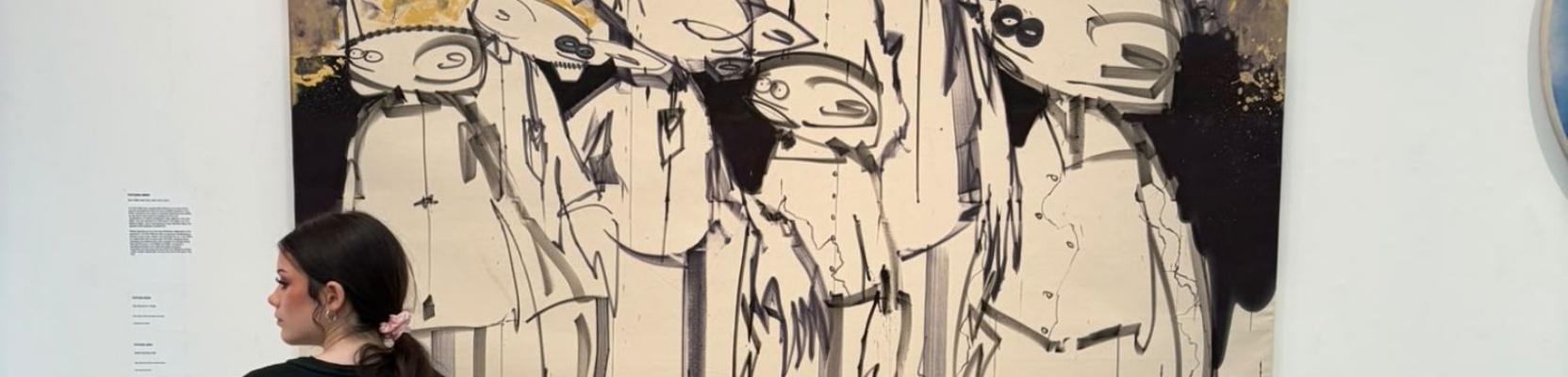
GCSE and A Level Art students from St Gabriel's enjoyed a fascinating and thought-provoking visit to London, exploring two very different collections that challenged them to look beyond the surface of art and objects, and consider the stories, values and social histories they represent.
The visit took students from the extraordinary anatomical collections of the Hunterian Museum to the vibrant world of street art, music and fashion at the Saatchi Gallery. While contrasting in subject matter, both experiences offered valuable opportunities to develop observational skills, challenge assumptions and explore the relationship between creativity, culture and society.
The Art of Observation: A Different Perspective at the Hunterian Museum
The first stop was the Hunterian Museum, home to a remarkable collection of anatomical and surgical specimens charting centuries of medical discovery.
For our Art students, the museum provided an unusual and fascinating opportunity for observational study. From ancient Roman surgical instruments to preserved anatomical specimens of humans and animals, the collection offered an extraordinary variety of forms, structures, textures and details to examine.
However, the visit quickly became about far more than observation.
The museum's sometimes macabre exhibits prompted some particularly thoughtful conversations among students about the history of medical science and the ethical questions surrounding the collection and preservation of human and animal remains.
Many of the specimens reflect a period when anatomical study was central to advancing medical knowledge. The understanding gained through such collections contributed to developments in surgery and healthcare that have ultimately helped save countless lives.
Yet viewed through a modern lens, historical collecting practices, particularly those associated with the Victorian era, raise important questions about consent, dignity and the treatment of human remains. Who has the right to collect, preserve and display the human body? How should museums interpret collections acquired under very different social and ethical standards? And how do our attitudes towards these objects change over time?
These are complex questions, without necessarily straightforward answers, but they provided an excellent opportunity for students to think critically about the objects in front of them.
For young artists, this kind of engagement is particularly valuable. Observational drawing teaches students to look closely, but studying art also involves learning to question what they see, considering the context in which objects were created, collected or displayed, and recognising that their meaning can change across cultures and generations.
Art as a Reflection of Society: Exploring Street Culture at the Saatchi Gallery
The second part of the visit offered a striking contrast, as students travelled to the Saatchi Gallery to explore Beyond the Streets, an exhibition examining the origins and evolution of street culture through art, music and fashion.
Here, the focus shifted from historical scientific collections to creative expression and the ways in which art can reflect, challenge and shape the society around us.
Street art and its associated cultural movements have often emerged outside traditional galleries and institutions, providing a platform for identity, individuality, social commentary and creative rebellion.
Through the exhibition, students were encouraged to consider how visual art intersects with music, fashion and popular culture, and how creative movements can communicate ideas about belonging, community and social change.
For GCSE and A Level students developing their own artistic practice, exposure to such a diverse range of influences is invaluable. It broadens their understanding of what art can be, challenges conventional definitions of artistic expression and encourages them to consider the messages they wish to communicate through their own work.
Why Learning Beyond the Classroom Matters
Although the Hunterian Museum and Saatchi Gallery could hardly have offered more contrasting experiences, together they highlighted an important principle: art does not exist in isolation.
Every object, image and creative expression has a context. Whether it is a preserved anatomical specimen, a historical surgical instrument or a piece of contemporary street art, it can tell us something about the people, beliefs and society that produced it.
For students of Art, developing this understanding is just as important as mastering technical skills.
Visits to museums and galleries allow students to experience objects and artworks first-hand, appreciating their scale, material qualities and detail in ways that photographs and digital reproductions cannot always convey. They also encourage independent interpretation, discussion and critical thinking, helping students develop the confidence to form and articulate their own responses.
Perhaps most importantly, these experiences remind young artists that inspiration can come from unexpected places. A museum of medical history may seem an unlikely destination for an Art trip, yet its collections can stimulate questions about form, representation, identity and ethics that are every bit as relevant to artistic practice as those raised by a contemporary gallery.
At St Gabriel's, we believe that meaningful learning extends well beyond the classroom. By providing opportunities to encounter different perspectives, explore unfamiliar environments and engage with challenging ideas, we encourage students to become curious, thoughtful and independent learners.
This was a fantastic trip that combined creative inspiration with some genuinely thought-provoking discussion, giving our GCSE and A Level Art students plenty to reflect upon and, we hope, new ideas to take forward into their own work.